
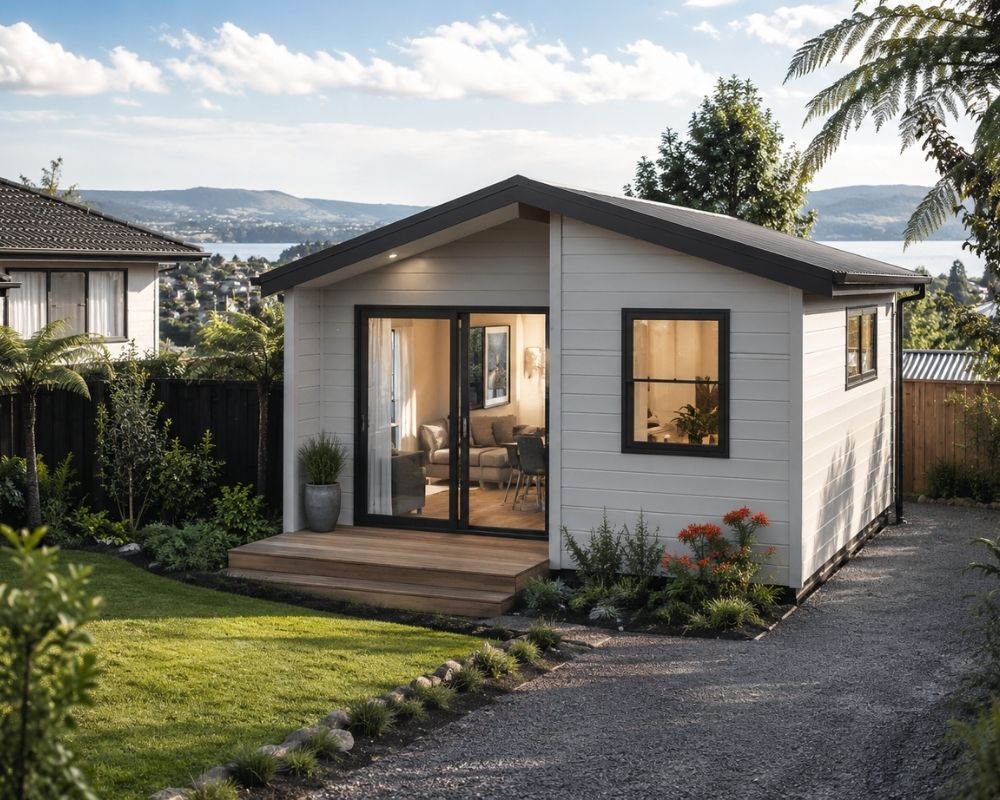
The New Zealand Government has introduced significant changes to the rules around granny flats, making it easier and faster for homeowners to add a small standalone dwelling to their property.
The changes are designed to increase housing options, support multi-generational living, and reduce consenting costs and delays for property owners.
January 2026 Changes
From 15 January 2026, certain granny flats can be built without obtaining a building consent, provided they meet specific exemption criteria.
The exemption applies to detached, single-storey residential units of up to 70 square metres that comply with the Building Code and are constructed or supervised by licensed building professionals.
The Government estimates that removing the need for a building consent could save property owners thousands of dollars in consenting fees and reduce project timeframes by up to 14 weeks.
However, the exemption does not remove all requirements. Property owners must still ensure their project complies with both building and planning rules.
To qualify for the exemption, the granny flat must:
- Be a standalone dwelling no larger than 70 square metres.
- Be single-storey in design.
- Meet all relevant Building Code requirements.
- Be built or supervised by licensed building professionals.
- Have a Project Information Memorandum (PIM) obtained from the local council before construction begins.
- Notify the council when construction starts and when it is completed.
In addition to these requirements, property owners should consider site-specific planning controls, infrastructure availability, development contributions, contractor costs, and any impacts on property rates.
Further Changes Announced in April 2026
On 28 April 2026, the Coalition Government announced further improvements to the granny flat exemption framework aimed at increasing flexibility and supporting off-site construction methods.
Off-Site Construction
One of the most significant changes will allow consent-exempt granny flats to be constructed off-site before a PIM has been issued, provided all exemption requirements are ultimately met.
This means manufacturers can build homes in advance, allowing purchasers to inspect completed units before buying and reducing overall construction time.
A PIM will still be required before any onsite works commence to ensure the proposed dwelling is suitable for the property where it will be located.
Expanded Building Materials
The Government also announced that the exemption will be expanded to include granny flats constructed using Structural Insulated Panels (SIPs) that hold a CodeMark certificate.
This change recognises modern construction methods while maintaining confidence that buildings meet New Zealand’s Building Code standards.
Technical Improvements
Additional technical amendments are being made to clarify how the exemption operates in practice and ensure the rules are workable for homeowners, councils, and building professionals.
These changes are expected to be implemented through an Order in Council during the second half of 2026.
What is a PIM?
A Project Information Memorandum (PIM) is a report issued by your local council that provides important information about a property before building work begins.
A PIM identifies matters that could affect the design or construction of a building project, including:
- Natural hazards such as flooding, erosion, subsidence, or geothermal activity.
- Existing public services such as water, wastewater, stormwater, and utility infrastructure.
- Relevant planning provisions and district plan requirements.
- Other site-specific information that may influence development.
Although a building consent may no longer be required for qualifying granny flats, a PIM remains an important part of the process. It helps ensure the proposed dwelling is suitable for the site and can prevent costly mistakes during construction.
What Does This Mean for Property Owners?
The 2026 changes create new opportunities for homeowners looking to accommodate family members, generate rental income, or make better use of their land.
However, the exemption rules are detailed and must be carefully followed. Not every property will be suitable, and compliance with district planning rules, site constraints, and infrastructure requirements still needs to be assessed.
Before proceeding with a granny flat project, it is advisable to:
- Confirm your proposal qualifies for the exemption.
- Obtain professional planning and design advice.
- Apply for a PIM early in the process.
- Review any site-specific planning restrictions.
- Engage licensed building professionals.
Need Advice on a Granny Flat Project?
While the new rules simplify the process, understanding whether your property qualifies can still be complex. Site constraints, planning controls, infrastructure requirements, and district plan rules all need to be considered.
Sigma Consultants can help assess your property, identify any planning requirements, and guide you through the process to ensure your project gets off to the right start.
Contact our team today to discuss your granny flat development plans.